
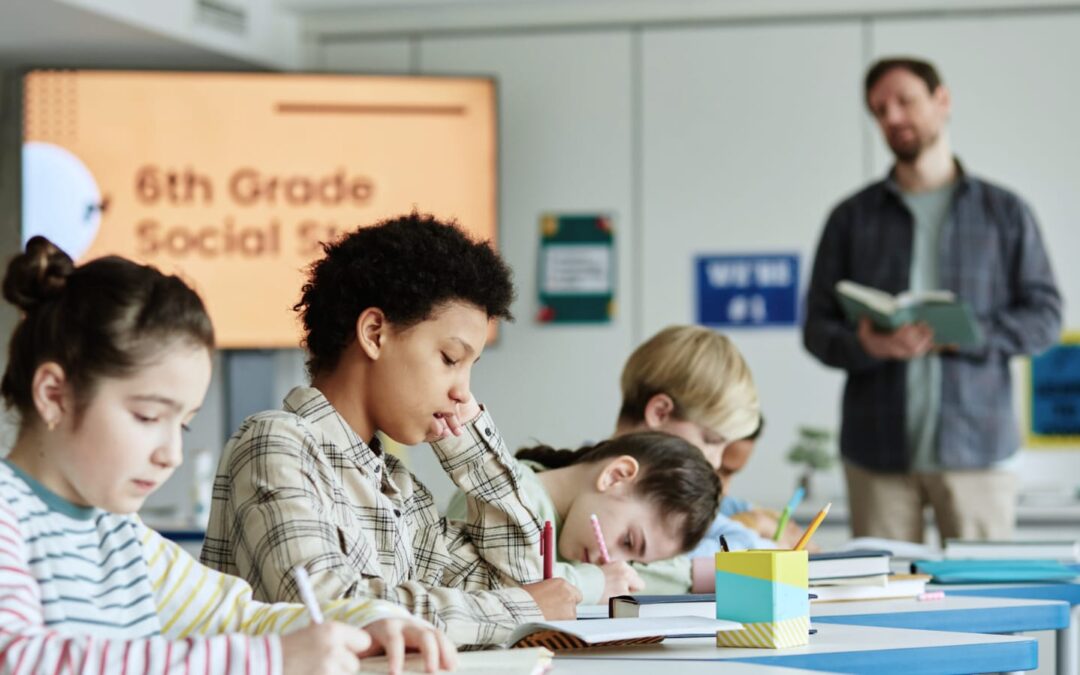
Every few years, the conversation around education reform resurfaces.
Particularly in Singapore, where academic achievement is deeply embedded in our national identity. Calls for change like smaller class sizes, curriculum updates, and less focus on standardised testing are all valid and well-intentioned. But it often misses the bigger issue: reforming a system never designed to honour individuality will always be an uphill battle.
Singapore’s education system—like so many around the world—treats standardisation like a virtue. Efficiency trumps individuality, and learning is measured in neatly packaged milestones. Every child, no matter their quirks, talents, or struggles, is squeezed through the same narrow academic pipeline.
And the result is always this: a system where kids aren’t so much educated as they are processed.
Even homeschooling, which is intended to offer a genuine escape hatch, comes with a long leash firmly held by the Ministry of Education (MOE). Their definition of homeschooling isn’t about actual freedom. It’s just school–but at home. Stringent regulations make non-traditional schooling an unnecessarily difficult choice. Families who want to homeschool must meet arbitrary requirements: one parent must be a full-time caregiver, students must follow a state-approved curriculum, and they must still take standardised exams. Homeschooled kids are still required to sit for the PSLE and land above the 33rd percentile: a requirement that ensures they remain tethered to the system even when they’ve ostensibly left it. This defeats the purpose of alternative education.
This is why discussions around reform feel frustratingly circular. We talk about making schools more child-centred (class sizes are too big, the curriculum is outdated, exams are too stressful, let’s fix it!), but the very structure of mass education resists personalisation. It is a system built to serve the system, not the child.
Maybe the problem isn’t that school is broken. Maybe it’s that it was never built right in the first place.
If we step back from the immediate frustrations of class sizes and exam stress, a larger question emerges: what if we acknowledged that education is not one path but many?
One of the biggest obstacles to meaningful learning in Singapore isn’t the curriculum or class sizes; it’s the very concept of compulsory education itself. The assumption that all children must follow a prescribed educational path from ages 7 to 12 leaves little room for genuine exploration. It forces children into a one-size-fits-all mould, regardless of whether that mould fits them. No matter how much we tweak and modernise, the reality is that school, as we know it, is sadly not designed to prioritise actual learning. It was built for efficiency—to process large numbers of children at the same pace, through the same subjects, measured by the same standardised tests. Kids aren’t individuals in this system anymore. They’re data points.
To borrow a phrase from Russell L. Ackoff, tweaking an outdated framework risks simply “doing the wrong thing, righter.” The problem isn’t just how the system works—it’s the existence of this system at all.
A lot of people assume that moving away from traditional schooling is a luxury: something only for the wealthy or the wildly unconventional. But that argument ignores a pretty major fact: learning doesn’t, and shouldn’t, have to be tied to a formal institution.
Education isn’t paying for expensive tutors or following a pre-approved syllabus. It’s about access to knowledge, and we’ve never had more of that than we do today. The rise of free educational platforms, community-based learning, mentorship programs, and cooperative learning spaces has made personalised education more accessible than ever. If we were to shift the focus away from institutional schooling and toward localised, flexible learning models, we could create an ecosystem where education is not tied to a singular system but is instead a dynamic, adaptable experience.
If we started rethinking what education could look like, we’d see that alternative learning isn’t just possible. It’s inevitable.
The core issue isn’t that schools exist. The problem is that they’re treated as the only legitimate form of education. And if we’re being honest, most of the “reforms” we debate just amount to making school a little bit less stressful—without actually questioning whether this model is the best we can do.
Going back to the concept of reform: this can take forever. Large-scale systemic reforms take years, often decades, to materialise. And children currently trapped in a rigid school system can’t afford to wait. The child struggling with stress, disengagement, or burnout today needs change now, not in ten years when policymakers finally agree on a watered-down version of reform.
We need to take a step back and ask a different question. One that doesn’t assume school, as we know it, is the only viable path. What if, instead of fixing a rigid structure, we focused on liberating children from it? Or, instead of controlling how children learn, we trust families to make those decisions for themselves? Instead of lobbying for marginal improvements within an imperfect system, we directed our efforts toward making alternative education a truly viable and accessible option?
But what if alternative education pathways were recognised not as fringe choices but as legitimate, parallel options?
We need to go beyond making incremental changes to an inherently restrictive system. Instead, we need to consider how to allow families the autonomy to design an education that works for them—one that isn’t dictated by a central authority, but by the needs and strengths of the child.
If more families were given the freedom, and support, to explore alternative educational paths, these resources would naturally grow. Just as workplace flexibility has become a topic of global discussion, so too should educational flexibility. And yet, our policies remain rigid, as though the only legitimate form of learning happens in a classroom with a set syllabus.
The push for reform, while well-intentioned, risks keeping us locked in a loop—always adjusting, never transforming. The most radical, yet necessary, shift isn’t making school better. It’s allowing families the freedom to decide what education looks like for them. The future of learning doesn’t need to be a singular vision dictated by a government body. It can be flexible, diverse, and truly child-centred, but only if we stop trying to repair a system that was never built for individuality in the first place.
This isn’t about dismantling education, but setting it free.