
A collective shiver is bound to go down a parent’s spine when their child sighs and announces, “I’m bored.”
It can feel as if we’ve failed them—like a good parent should always have a clever distraction up their sleeve.
The modern world doesn’t help, either. We live in a culture that equates busyness with worth, productivity with progress, stimulation with success, etc. Childhood hasn’t escaped this. Kids’ calendars are increasingly packed with lessons, sports, enrichment, and screens, all designed to fill every possible gap in their day.
But the paradox: the gap is the point.
What if we told you that boredom isn’t a problem to solve, but something that yields benefits once we explore deeper?
It’s one of the most fertile, underrated conditions for learning and growth that we have systematically erased.
Researchers have long suggested that boredom has a functional role in human development. When the brain isn’t flooded with structured input, it defaults to what’s called the “default mode network,” a system linked to imagination, memory consolidation, and sense-making. In other words, when kids say “I’m bored,” their brain is quietly reorganising information, making connections, and generating ideas.
A study by Mann and Cadman (2014) found that participants who engaged in a deliberately boring task, like copying numbers from a phone book, were later more creative in problem-solving tasks than those who hadn’t. Another review in Perspectives on Psychological Science (Eastwood et al., 2012) described boredom as a motivational signal, an internal nudge that tells us: what you’re doing isn’t satisfying, it’s time to redirect your energy.
This doesn’t mean every moment of boredom produces a masterpiece. It means boredom is a necessary pause, or a reset button. It creates the inner space where children can move from passive consumption to active creation.
Educators have noticed this for centuries. Maria Montessori warned against over-instruction, arguing that too much adult interference prevents children from developing initiative. John Holt, one of the early voices in unschooling, often observed that when children are left alone long enough, their curiosity eventually leads them into deep exploration.
Boredom is essentially the soil where self-direction grows.
When children are perpetually directed by teachers, parents, coaches, or apps, they become skilled at following instructions but less adept at originating their own ideas. Left without a script, many initially flounder. But this discomfort is the necessary first step toward self-discovery.
It’s in boredom that children invent elaborate games with couch cushions, scribble a comic strip, attempt a dance move, take apart a gadget, or simply sit and daydream. Each of these acts is a rehearsal ground for problem-solving, creativity, autonomy, and resilience.
However, parents still resist. And not without reason.
We fear boredom because:
It feels like wasted time.
We don’t want our children to “fall behind.”
We equate boredom with laziness or disengagement.
And, most truthfully, it’s inconvenient. A bored child often whines, demands attention, or disrupts the fragile balance of family life.
In an age where achievement is currency, letting your child sit on the floor and stare into space feels… negligent, perhaps. Shouldn’t they be practising piano? Coding? Learning Mandarin? Shouldn’t every gap be optimised?
But the contradiction is this: filling every silence with activity doesn’t protect children from aimlessness. It produces it. Because if kids never practise tolerating a blank page, they don’t learn how to write on it.
It’s not like we aren’t also similar, as adults. We, too, are so conditioned to avoid boredom that stillness feels intolerable. We scroll, we swipe, we consume. But in those moments, our capacity for wonder, reflection, and creativity shrinks.
Children are on the same trajectory—except their devices are shinier, louder, and designed with even more precision to keep them hooked. If we want kids to grow into adults who can think independently, imagine boldly, and withstand the silence long enough to hear their own ideas, then we have to let them practise now.
It will look messy. They’ll likely mope, whinge, and say “there’s nothing to do.” But given time, they will find something to do. And that transition from discomfort to agency is one of the most valuable life skills they can acquire.
So, resist the quick fix. When your child announces they’re bored, instead of handing them a tablet or rushing in with suggestions, hold the silence. Let them sit in it.
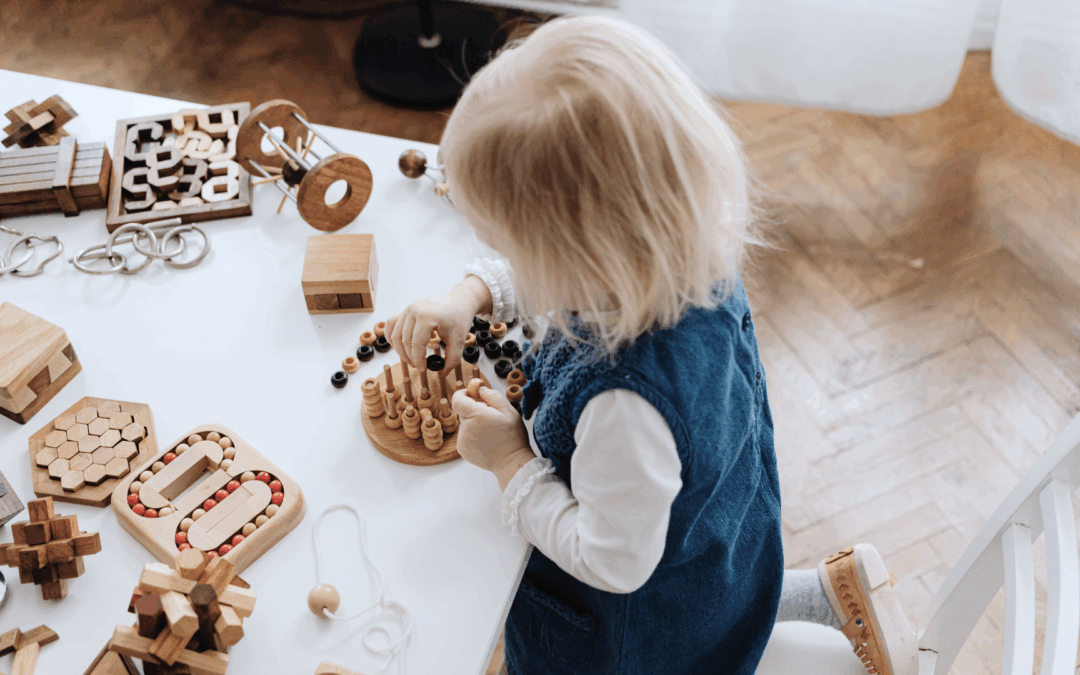
Create a boredom-friendly environment. Open-ended materials (blocks, art supplies, books, nature) work better than closed-ended entertainment. They invite children to generate their own activity.
Normalise boredom. Frame it not as a problem, but as an opportunity. “Great, you’ve got some time to figure out what to do.”
Model it. If children see you scrolling every time you’re restless, they’ll learn to do the same.
But most importantly… give it time. The medicine of boredom isn’t instant. Children often need to wade through minutes (or hours) of “nothing to do” before they stumble into something deeply engaging.
Boredom, to us, is about trust; trusting that children don’t need to be managed into productivity every second. Trusting that their inner world has enough spark to ignite without constant adult input. Trusting that growth doesn’t always look like progress charts and enrichment schedules.
Because when we strip away the noise and the plans, children often surprise us. They show us that the “dead space” we’re so eager to fill is where their deepest learning begins.
So the next time your child sighs and says, “I’m bored,” resist the urge to fix it. Leave the gap. Let them sit in the silence.
Boredom isn’t the enemy. It’s sometimes the beginning.
