
We love a neat, predictable timeline. First words by this age, walking by that one, social skills unfolding in predictable, measurable increments.
We love “normal.” We crave it, and the sense of approval it brings so long as we abide by it. We measure against it. We build entire systems around it. From the moment a child is born, we’re handed charts, percentiles, and milestones that map out what development should look like. At school, normal is reinforced in the form of standardised tests, expected reading levels, and of course, one-size-fits-all benchmarks. Parents whisper about it at playgroups, doctors measure it in percentiles, and teachers use it to define progress.
A child who doesn’t speak in full sentences by two years old is flagged for intervention. A seven-year-old who still struggles with reading is labelled behind. A neurodivergent child who doesn’t conform to classroom expectations is called ‘disruptive.’ But have we ever stopped to ask: Behind whom? And disrupting what?
Society rewards those who fit the mould: those who sit still, follow instructions, and check all the right boxes at the right time.
But if there’s one thing we’ve learned from working with children, it’s this: normal is a myth.
Whether it pertains to development or a larger societal expectation that plagues most of us, look closer and you’ll find that ‘normal’ is nothing more than an arbitrary measuring stick, shaped by cultural expectations, outdated research, and a stubborn reluctance to embrace difference.
There is no universal, one-size-fits-all roadmap for how a child should grow, learn, or succeed; there never has been. And the more we try to force children into a “normal” that was never meant to include the full spectrum of human diversity, the more we miss out on their true potential.
Variation isn’t the exception—it’s the rule. Some kids read at four, some at eight. Some thrive in group settings, while others need solitude to recharge. Some children can sit still and focus with ease, while others need to move, fidget, and engage their entire body to learn. None of these differences mean a child is behind, ahead, or broken. They simply mean they are who they are. And when we stop measuring them against the arbitrary, we free them to grow into full, authentic learners.
The problem with the idea of ‘normal’ is that it creates a hierarchy: one that places some children at the top and others in a perpetual state of “catching up.” But catching up to what? Development isn’t a race, and intelligence–or at least, what we reductively define as intelligence–isn’t a single track.
The real question is this: who decided what ‘normal’ even looks like?
The developmental milestones we so often defer to—when a child should walk, talk, read, or even regulate their emotions—aren’t a universal truth. They are largely derived from Western, middle-class studies, conducted decades ago, on children with specific upbringings. These studies were overwhelmingly focused on Western children in nuclear families, with little consideration for cultural variations, socioeconomic backgrounds, or neurodiversity.
And yet, despite all this, we cling to it. Because the idea of ‘normal’ makes the unpredictable nature of child development feel easier to manage. Despite all the evidence that humans develop in vastly different ways, we still cling to narrow ideas of “typical” and “age-appropriate.” We still panic when a child doesn’t fit the timeline. We still express concerns when a child doesn’t talk as early as their peers, struggles with reading, or approaches learning in ways that don’t fit within pre-approved categories.
These narrow benchmarks continue to dictate how we measure growth and success. But when we step outside of these rigid expectations, our ideas of development have the chance to expand. In some parts of the world, academic learning doesn’t begin until later ages—yet these children still go on to succeed in their own ways. The timeline we treat as absolute is simply a reflection of cultural priorities, not an objective measure of ability.
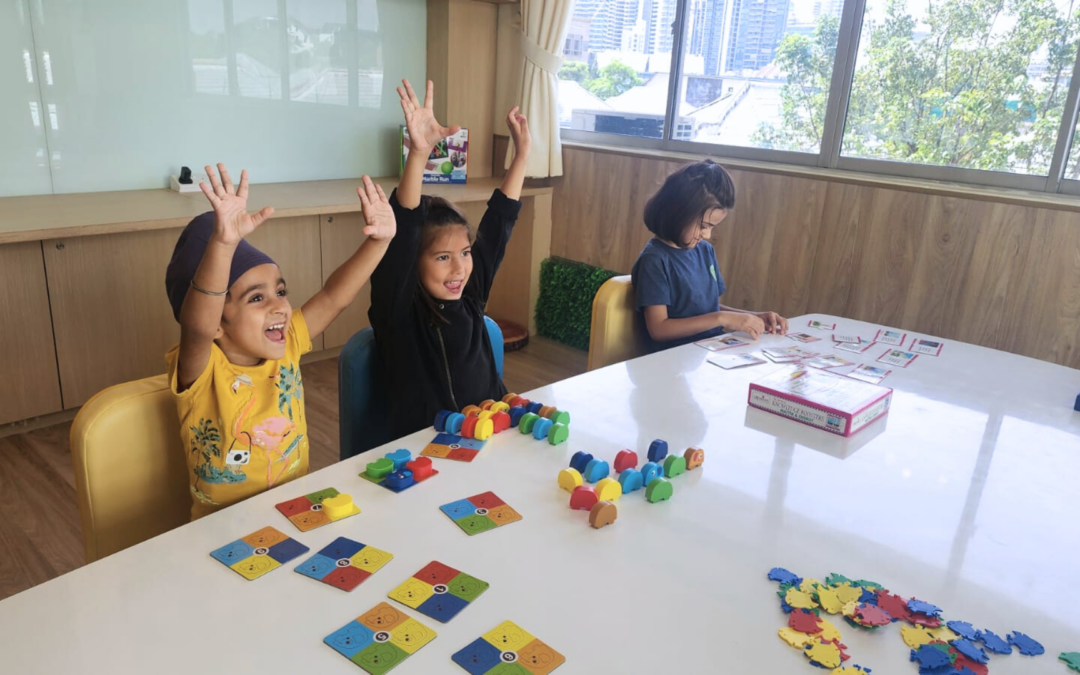
At Imagine If, we see firsthand how harmful the pressure to be ‘normal’ can be. We’ve seen countless parents panic when their child isn’t hitting milestones at the ‘right’ time, fearing that something must be ‘wrong.’ More concerning is how we’ve seen kids internalise frustration when they struggle to do what’s expected of them. But human development isn’t a factory assembly line. Growth happens in waves, in stops and starts, in unpredictable bursts. And most importantly, every child is on their own timeline. So, instead of asking, “Are they where they should be?” we ask, “Where are they, and what do they need?
In practice, this means we don’t rush to “correct” things that aren’t actually problems, but differences. If a child isn’t reading by a certain age, we don’t panic; we look at their unique strengths, what excites them, and how they engage with the world. Maybe they absorb information best through hands-on exploration, storytelling, or discussions instead of decoding words on a page just yet. Learning still happens, just in a way that makes sense for them.
It also means we resist the urge to over-structure every moment. We create environments where children have room to explore, experiment, and yes, even fail; without those failures being treated as signs of delay or inadequacy. If a child struggles with social interactions, we don’t force them into scripted responses; we support them in finding their own ways to connect. If they process information differently, we don’t make them fit the lesson, we make the lesson fit them.
This begs the question: what happens when we embrace the child in front of us? We stop rushing. We stop worrying about whether they are ‘on track’ and instead focus on whether they feel safe, supported, and understood. Because when children feel seen—not compared, not measured, not ‘fixed’—growth happens. Not on our schedule, but on theirs.
The most important thing we can do for children is to meet them where they are, not where a chart says they should be. In doing so, we may just find that ‘normal’ was never the goal—it was the limitation all along.
