
What if we told you that we don’t believe in the concept of “good behaviour?”
Hear us out.
When a child is sitting silently in the corner, not causing a ruckus, we can breathe a sigh of relief and think, “Ah, I’m a great parent/teacher!” In traditional schooling systems, respectability is deeply intertwined with behaviour management, after all. In schools, it’s the norm to reward compliant kids who can sit quietly, raise their hands, and follow instructions to the letter.
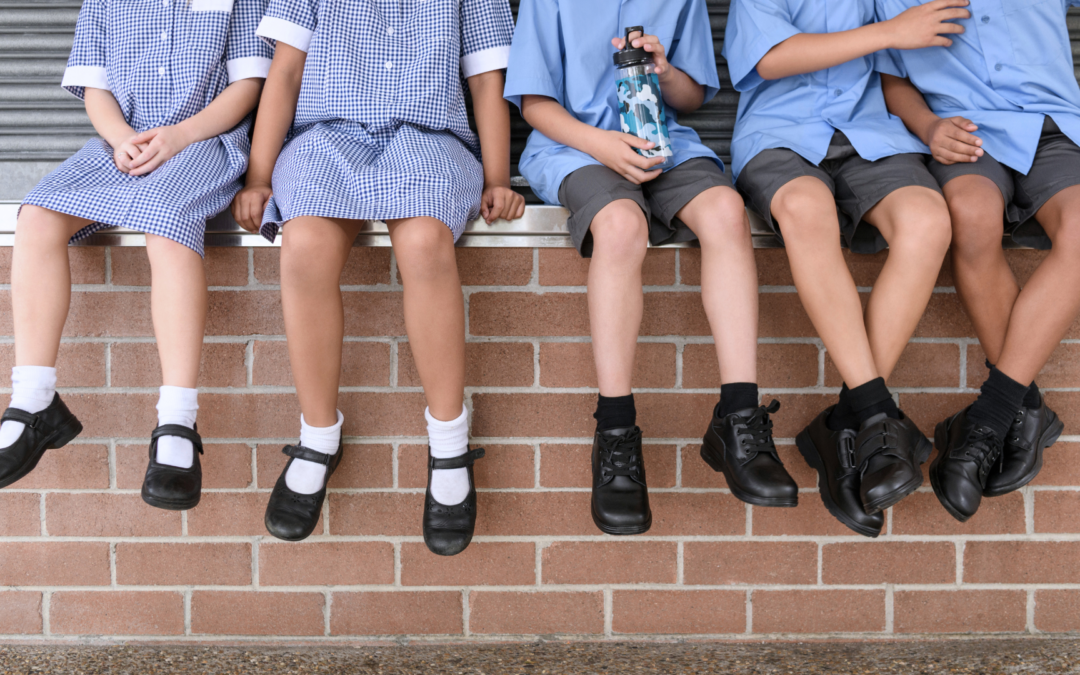
Schools love their rules. No hats indoors, no chewing gum, uniform inspections, and straight lines in the hallway. These rules are often presented as vital for discipline and order, but are they? Or are they simply tools to maintain a system where children fall in line, where they respect authority without questioning it? We reward them with gold stars and smiley face stickers when they comply, but what’s the lesson here? Are we teaching them how to be critical thinkers, how to push boundaries in healthy ways, and how to be themselves? Or are we teaching them that “good” means obedience and anything less than that is a problem to be fixed?
We need to reckon with how the concept of good behaviour is itself influenced by this larger system that compels it to be so.
So let’s be real: respectability, and by inextricable extension in the context of children and education, often means aligning with what’s convenient for adults.
It’s about creating kids who are “seen and not heard,” who don’t ask difficult questions, and who don’t disrupt the status quo. And here’s where it gets tricky: respectability isn’t necessarily about teaching kids values like kindness, empathy, or curiosity. No, respectability is about compliance, about looking and acting the “right” way, not shaking things up. In short, it’s about moulding children into what society deems acceptable, rather than letting them discover who they really are.
The inconvenient truth is this: that “good behaviour” isn’t always a sign of good parenting or education, underlined by the issue of how compliance is often confused with success. We applaud our children for their ability to not rock the boat, but what we’re actually doing is applauding their ability to conform to a system that may not have their best interests at heart. They learn to suppress their individuality in exchange for our approval, but at what cost?
So that’s why, in parenting and education, “good behaviour” is often elevated to a status of being a sacred grail of childhood. It is an aspiration. Respectability, as a whole, is too; for even adults. The word alone carries a certain weight: and it’s what society whispers in our ears as we raise our kids and pass it down—be respectable, follow the rules, fit in, and conform. Rewards are doled out based on politeness, which often covertly translates to the ability to fall in line, after all. This is true for how we are expected to show up in society–and it is undeniably necessary to a certain extent.
It’s not inherently wrong to want kids to behave or to hope for some level of order. It’s about the why and how. When respectability becomes a tool for conformity, a measure of worth, or a way to make kids “easier” to manage, we’re heading into dangerous territory. Encouraging children to be polite or considerate is very different from forcing them to follow arbitrary rules in the name of ‘good behaviour.’ One creates mutual respect, and the other demands obedience for obedience’s sake. And that’s where kids get lost in the labyrinth of adult expectations that often have more to do with convenience than actual growth or learning.
When we hold up this ideal of ‘good behaviour,’ we’re often missing the bigger picture. A child might sit quietly in class, but is that because they’re engaged and focused? Or are they shutting down emotionally, scared to make a mistake or draw attention? Conversely, a child who challenges authority or refuses to follow a rule might not be a “troublemaker”—they might just be testing boundaries, seeking agency in a world where they feel they have none. This is the nuance. It’s about understanding that behaviour is communication and that not all “good” behaviour is actually good for the child. At Imagine If, we shift the focus from outward appearances of compliance to the child’s inner world, helping them build real skills that serve them—not just in school but in life. Because raising well-rounded humans isn’t about making them fit into a narrow definition of ‘decorum’—it’s about helping them shine in their own way.
And therefore at Imagine If, we reject this notion of respectability as the ultimate goal. We believe in something deeper, and more meaningful. For us, it’s not about controlling how kids behave to fit into neat little boxes for the convenience of the adults around them. We want to help them cultivate a sense of self-respect, where kids are encouraged to express their individuality and where their voices are valued, not silenced. We aren’t raising learners who are just “respectable” by societal standards; we’re raising kids who respect themselves, who know that they don’t need to fit in to be worthy, and who understand that challenging norms can be a powerful act of growth. The focus lies in the real work—building up children who are comfortable being exactly who they are, not just who we expect them to be.
We refuse to accept that respectability politics should define “good” based solely on compliance. Instead, we cultivate an environment where children can unleash their quirks, curiosities, and creativity without the fear of getting slapped with a “bad behaviour” label. Because let’s be honest: if we truly want to nurture resilient, innovative individuals, we need to create space for them to be their authentic selves. It’s not about how quietly a learner sits; it’s about how passionately they engage with the world around them.
At the end of the day, we need the rebels. The critical thinkers. The kids who ask “why” when everyone else just nods. These are the future leaders, the ones who see beyond the status quo and push for progress. They might not always follow the rules, but that’s exactly why they’re so vital. Innovation doesn’t come from quiet compliance; it comes from questioning, challenging, and disrupting. By valuing only “good” behaviour and glorifying the “respectable,” we risk suppressing the qualities that lead to real change.
Every time you see your child pushing back against authority or expressing their thoughts a little too loudly, ask yourself: Are they just trying to assert their individuality in a world that demands conformity, convenience, and palatability? Could they, perhaps, also be asserting their agency in an environment they don’t feel is right for them? Could we learn something about taking into account their wishes and opinions? Maybe that disruptiveness can often be a good thing. Our children’s existence and the way they show up in all of their ‘mess’ were never meant to just be tolerated, anyway.
